First Steps After a Storm Damages a Tree on Your Property
Assess the Situation from a Safe Distance
After the storm passes and the wind dies down, your first instinct might be to rush outside and inspect the damage. It is smart to pause and look first from inside your house or from a sheltered spot. High winds can leave trees in a fragile state. Branches may be hanging by a sliver of bark, trunks can be split but still standing, and roots may have loosened without the tree falling completely. A tree that looks stable might shift or drop a limb as the ground dries or the weight shifts. Take your time. Walk around the property only after you are certain there are no immediate hazards overhead.
Check for Power Lines and Electrical Hazards First
Before you go near any fallen tree or broken branch, look up and around for power lines. A storm can bring down electrical wires along with trees. If a limb or trunk is touching a power line, or if a line is lying on the ground near the tree, keep everyone away. Call the utility company immediately. Do not try to move the branch or the line yourself. Even a line that looks dead can carry current through wet ground or through the tree itself. This is one situation where you do nothing until the power company says it is safe. Mark the area with a mental boundary and keep children and pets well back.
Address Immediate Safety Risks to People and Property
Once you have confirmed that no power lines are involved, look at the tree itself. Check whether any part of it is resting on your house, your car, a shed, or a fence. Roof impact from a heavy limb can cause structural damage that gets worse if the limb shifts. If a tree has fallen onto your home, do not try to remove it yourself. The weight of the wood can be deceptive, and pulling at it can cause more damage or collapse part of the roof. Instead, secure the area inside the house. Move furniture away from the affected wall if water is getting in. Place a bucket or tarp to catch leaks. The priority is keeping people safe and preventing further water damage until a professional can assess the structure.
If a tree is blocking a driveway or a walkway, decide whether you need to clear a path for emergency vehicles or for your own exit. A small branch can often be moved by hand. A larger limb or a whole fallen tree across a driveway is a different matter. Cutting a loaded branch can release tension unpredictably. If you are unsure about the weight or the tension in the wood, it is better to wait for help. In many cases, the tree service crew can arrive quickly enough to clear a single lane for a car.
Look Up for Hanging Limbs and Split Trunks
After the storm, a tree may look mostly intact but have a hanging limb caught in the upper branches. These are sometimes called widow makers for a reason. A limb that is wedged or partially broken can fall without warning hours or even days later. The same goes for a split trunk. A fork in the trunk may have cracked under the wind load, leaving one side of the tree attached by only a strip of wood and bark. That half can come down in a calm breeze or under its own weight as the wood dries out. Mark these hazards clearly and keep everyone away from the area directly beneath them. Do not attempt to knock a hanging limb loose with a pole or a rope. That job requires the right equipment and training.
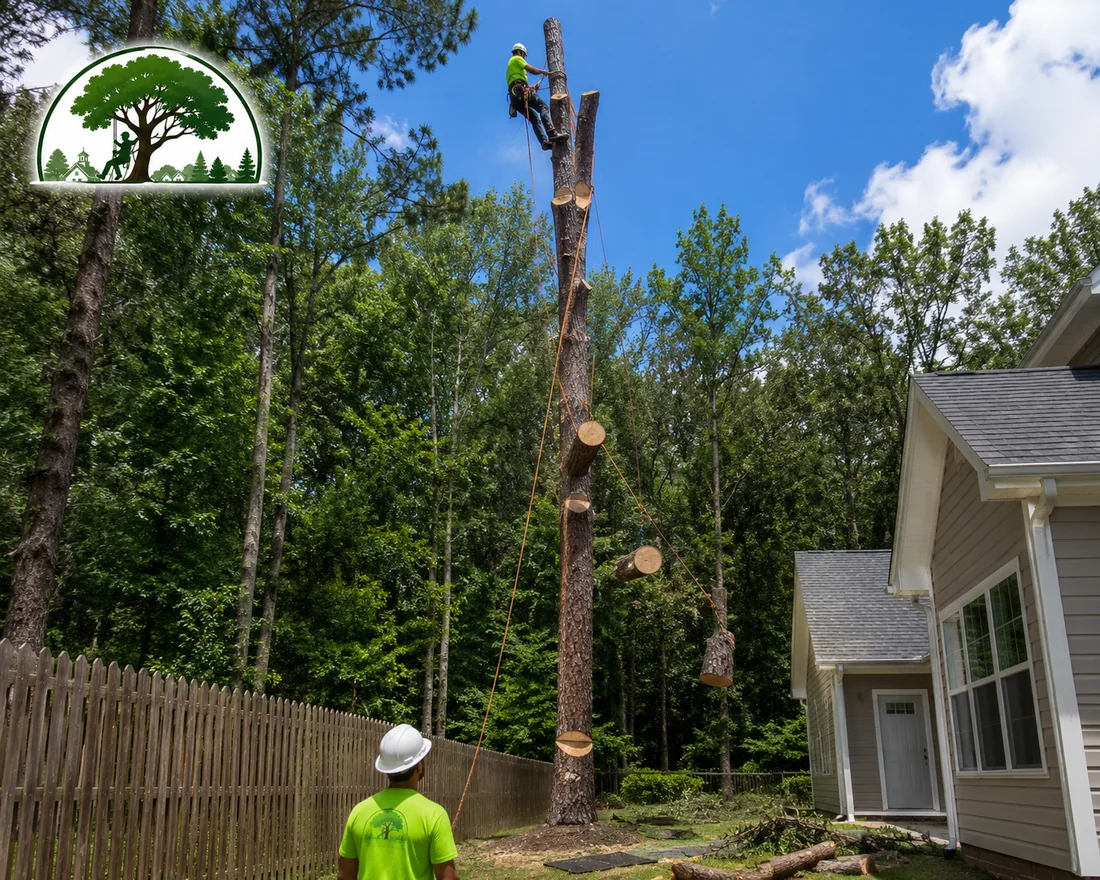
Site stabilization is the term arborists use for making a damaged tree safe until it can be removed or repaired. That might mean cabling a split trunk temporarily or removing the most dangerous limbs first. For a homeowner, site stabilization means not creating new hazards while you wait. If a limb is resting on another branch, do not cut the supporting branch. That can release the limb suddenly. If the tree is leaning after the storm, do not try to pull it upright with a vehicle or a winch. The root system may be too damaged to hold, and the tree can fall during the pull.
Document the Damage Before You Clean Up
Before you start any storm damage cleanup, take photos and notes. Walk around the property and photograph the tree from several angles. Capture the split trunk, the hanging limb, the fallen tree, and any roof impact or blocked driveway. If there is damage to your house or fence, get a picture of that too. This documentation is important for insurance claims. Most homeowner policies cover tree removal if the tree damaged a structure, and they may also cover debris cleanup. The photos give the adjuster a clear picture of what happened. Write down the date and time of the storm and any notes about how the damage occurred. Keep these records together.
Decide What Can Wait and What Needs Urgent Attention
Not every broken branch requires an emergency call. A small limb that snapped off and landed in the yard can sit for a day or two. A tree that is leaning away from any structure and not blocking anything can wait until the ground dries out and the tree service can schedule a regular visit. But a tree that is leaning toward the house, a limb that is hanging over a play area or a walkway, or a split trunk that could go either way needs prompt attention. If the tree is blocking the only road access for your property, that also counts as urgent. Use your judgment, but when in doubt, err on the side of calling for help. A consultation with a local tree care professional is usually free, and it gives you a clear plan.
In the meantime, you can do some light work yourself. Pick up small branches and twigs that are scattered across the lawn. Clear debris away from drains and gutters so water can flow freely. If a limb is resting on a bush or a flower bed, you can gently lift it off, but be aware that the limb may be heavier than it looks. Use proper lifting technique. If the limb is attached to the tree at one end, leave it alone. Do not try to break it off by hand or with a saw unless you are certain there is no tension in the wood.
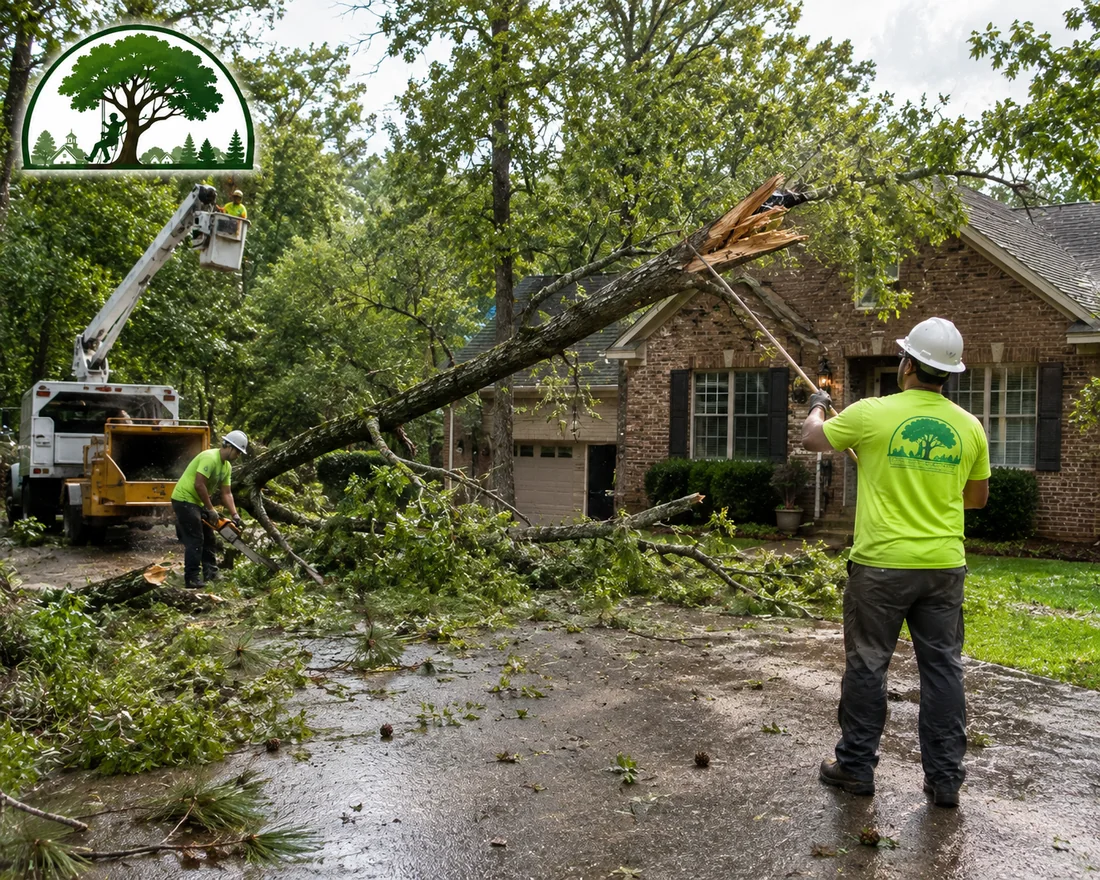
Coordinate with Your Tree Service for Safe Removal
When you call a tree service, describe the situation clearly. Tell them about any power line hazard, roof impact, blocked driveway, or hanging limb. That allows them to bring the right equipment and send the right crew. A company that handles emergency storm response will prioritize jobs by risk. They may ask for photos, so have those ready. Expect them to ask about access to the tree. If the tree is in a backyard with a narrow gate, let them know. If the ground is saturated, that matters too. The more detail you give, the faster they can work.
Once the crew arrives, stay clear of the work area. Professionals have their own safety zones and communication signals. Do not stand under the tree or near the chipper. Let them do their job. After the main hazard is removed, the crew will usually clean up the debris and grind the stump if you request that service. That part of the job can often wait a few days, especially if the ground is wet.
Plan for the Long Term After the Cleanup
Once the immediate danger is gone and the storm damage cleanup is complete, take a look at the rest of your trees. A storm that broke one tree may have weakened others. Look for cracks in the bark, leaning trunks, or branches that have lost their leaves early. A tree that survived the storm might still have internal damage that shows up later. Have a certified arborist inspect your trees every year or two, especially if you live in an area that gets high winds regularly. Preventive pruning can remove weak branches before they become hazards. A well-maintained tree is less likely to fail in a storm.
If a tree was completely uprooted, consider what to plant in its place. Choose a species that is suited to your soil and climate, and one that has a strong branch structure. Some trees are more wind-resistant than others. A local nursery or arborist can recommend good options. Planting the right tree in the right spot reduces the chance of a repeat event. And if you lost a tree that was important to you, take the time to remember it. A healthy tree adds value to a property, but it also adds beauty and shade. Replacing it is part of the recovery.
The days after a storm are stressful. The noise, the damage, the disruption all add up. Taking the first steps methodically makes the whole process safer and more manageable. Start with safety, document what happened, call the right people, and then work through the cleanup at a pace that keeps everyone out of harm's way.